
The Money That Is Only Passing Through
Part of the balance on your screen was collected on somebody else's behalf, and it leaves on a date that was set long before you looked at it.
The European Commission puts it plainly. VAT is borne by the final consumer and is not a charge on businesses. Customers pay it as part of the price, suppliers collect it, and suppliers remit it.
The business is the collector rather than the payer. The account is where the money waits.
So this lesson takes the two pots out of the balance, names who set the dates, and leaves you with one question worth putting to somebody.
It was never a charge on the business
A tax authority describes each party in a chain of supply as acting as a collector. That word is theirs rather than ours, which matters on a subject where nearly everything published was written by a vendor.

A coat on a counter, a ticket in the other hand. Holding it is normal, holding it carefully is the job, and nobody there thinks the coat changed owner.
Reading the balance without that distinction produces one of two errors.
Either you spend money that was always going to leave, or you sit on cash you were free to use all along.
What actually leaves is the difference
The amount handed over is not everything you charged out. Against it sits the tax you paid on your own business purchases, deducted in the same period, and what leaves the account is the difference.
That is why lesson three lands here as cash rather than as paperwork. A missing supplier invoice raises the payment, because the deduction that would have reduced it is not in the return.
Put the balance in, then take the two pots out of it.
The figure at the top is where the runway division from lesson one belongs. Run that division over the raw balance instead and it overstates the months by exactly the share the panel has showed you.
The same shape, on payroll
Payroll works the same way and the mechanics are written into national law everywhere checked. The employer withholds the employee's tax and contributions, the employee cannot object, and the employer carries the liability for remitting them on time.
What you collected, less what you can deduct, due at the next return.
Employee tax and contributions withheld, on their own remittance date.
What is left, which is the only part of the balance a decision can spend.
The calendar somebody else set
A return covers a period your country sets at one, two or three months. The filing deadline falls no more than two months after that period ends, and payment normally rides with the return without being obliged to.
Every date here was set by somebody who will never ask whether the month suits you.
Filing late and paying late are two separate penalties in every regime checked, interest runs from the original due date regardless, and several escalate on repetition. One date is worth entering now. From 1 July 2030 an EU cross-border invoice has to be issued in a structured electronic format, on a ten-day clock, and a member state may make the deduction conditional on holding one.
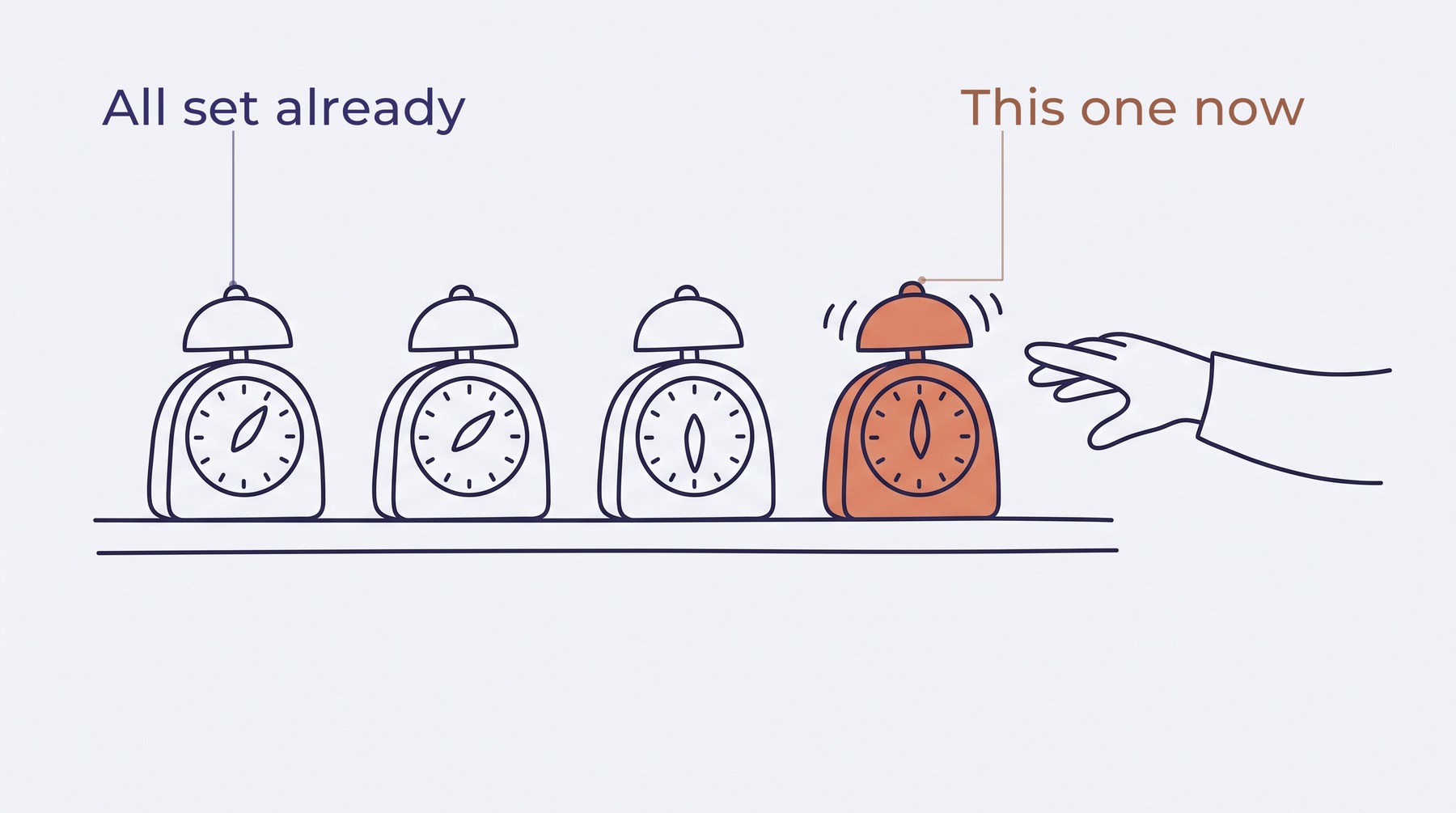
Four timers, one of them going off. None was set by the person reaching for it, and all four ran while the monthly pack was being read.
A fractional CFO is an experienced finance leader engaged part-time for this kind of judgement, and the conversation is cheap before a decision and expensive after one. Three of your own dates are on a calendar somewhere: the hire, the price change, the switch to annual billing. Which one would you rather have talked through a month beforehand?
Where these numbers come from
That the tax is borne by the final consumer and is not a charge on businesses is the European Commission's own wording, and the description of each party as a collector is a tax authority's. The one, two or three month period and the two-month filing limit are set in an EU directive, as is the 2030 electronic invoicing date. No national rate or deadline appears here.