
Where the Profit Went
The report says the month made money. The balance says there is less in the account than there was thirty days ago, and both documents are telling the truth.
A securities regulator put the reason in one line for readers who do not do this professionally. An income statement tells you whether a company made a profit. A cash flow statement tells you whether it generated cash.
Profit is a statement about when the work happened. The balance is a statement about when the money moved.
So this lesson takes that gap apart, gives it a size somebody else has measured, and names the one problem it cannot explain.
Two clocks, one month
Everything in the monthly pack except the cash flow statement is written on the accrual basis. One line of the standard says so, naming cash flow information as the exception.
A sale lands in the month you delivered it
A cost lands in the month you consumed it
An annual invoice spreads across the year it covers
A sale lands on the day the payment clears
A cost lands on the day it leaves the account
An annual invoice lands whole, on one Tuesday
Accrual records the effects of a transaction in the period they occur, even where the cash moves in a different one. A receivable is that difference standing on the balance sheet with a name.
The cash flow statement's indirect method is the profit figure with the timing put back. It starts at profit, undoes every accrual, and leaves the movement in the account, which is why it reconciles the two documents.
The gap has a legal size
Across the EU the default period for a commercial payment is thirty calendar days from the invoice arriving, and sixty is the ceiling a contract may agree unless a longer term is expressly agreed and not grossly unfair.
Agreed terms across European business average forty-three days. What actually happens is a third figure again, and the distance running between all three of them is this lesson's whole subject.
Larger customers pay later, and the pattern holds in sixteen of twenty member states measured. Who owes you shapes a month as much as the size of what they owe.
Money you have not earned yet
The other half of the gap runs the opposite way. Cash arriving before the work is done is not revenue. The standard calls it an obligation to deliver goods or services for money already taken.
An annual contract paid in January is a year of work still owed when that month closes. The bank looks comfortable. The report is honest. Deferred revenue names the difference between them.
Interest and a fixed recovery sum on a late commercial payment are a right you already hold across the EU, whether or not anybody ever claims them.
Revenue that repeats and revenue that happened once
Two months can carry identical totals and mean entirely different things. The standard asks companies to break revenue into categories showing how nature, amount and timing differ across it.
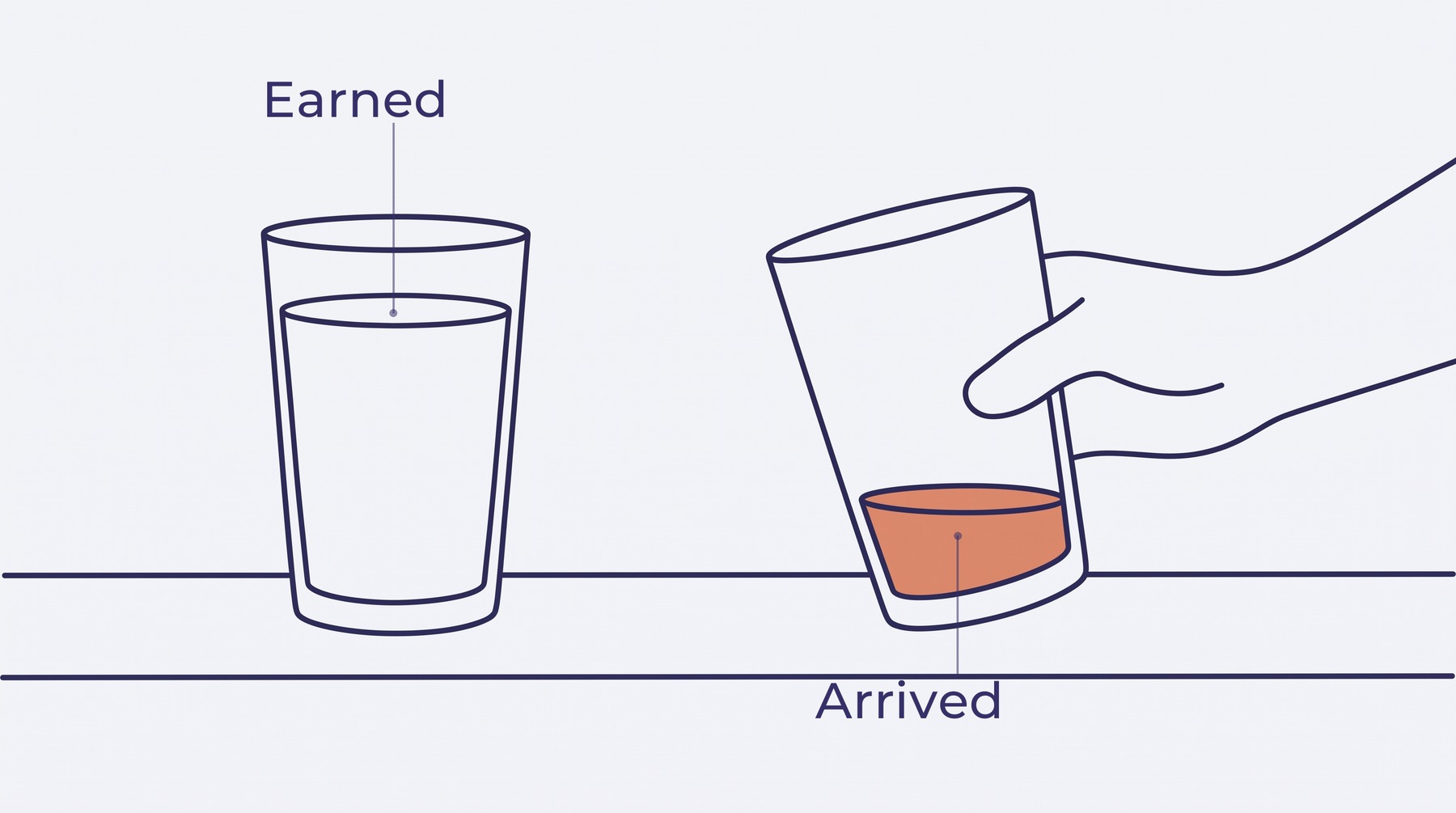
The jug on the left is the month the report describes. The stream is what crossed. Neither vessel is wrong.
Gross profit is revenue minus cost of sales. No reporting standard makes a pack carry that line, so a monthly pack without one is not defective, and asking your finance department to add it is a request rather than a complaint.
What this reading cannot fix
Timing explains a gap between a profitable month and a thinner account. It explains nothing about a business whose margin is the problem, and the two get confused because they look alike.
Revenue that repeats next month without anybody selling it again.
Revenue that happened once, which is real money and a poor basis for a plan.
The share of both that has landed, because that is what the account can spend.
Run those three splits over one month in the reporting dashboard and the pack stops reading as a verdict on the month and starts reading as a description of it.
Where these numbers come from
The accrual carve-out, the meaning of accrual, and the treatment of money taken before delivery are quoted from the standards that set them. The thirty and sixty day payment periods come from an EU directive. The sixty point three days against forty-three of agreed terms is the European Commission's 2024 measurement, reported as survey based.